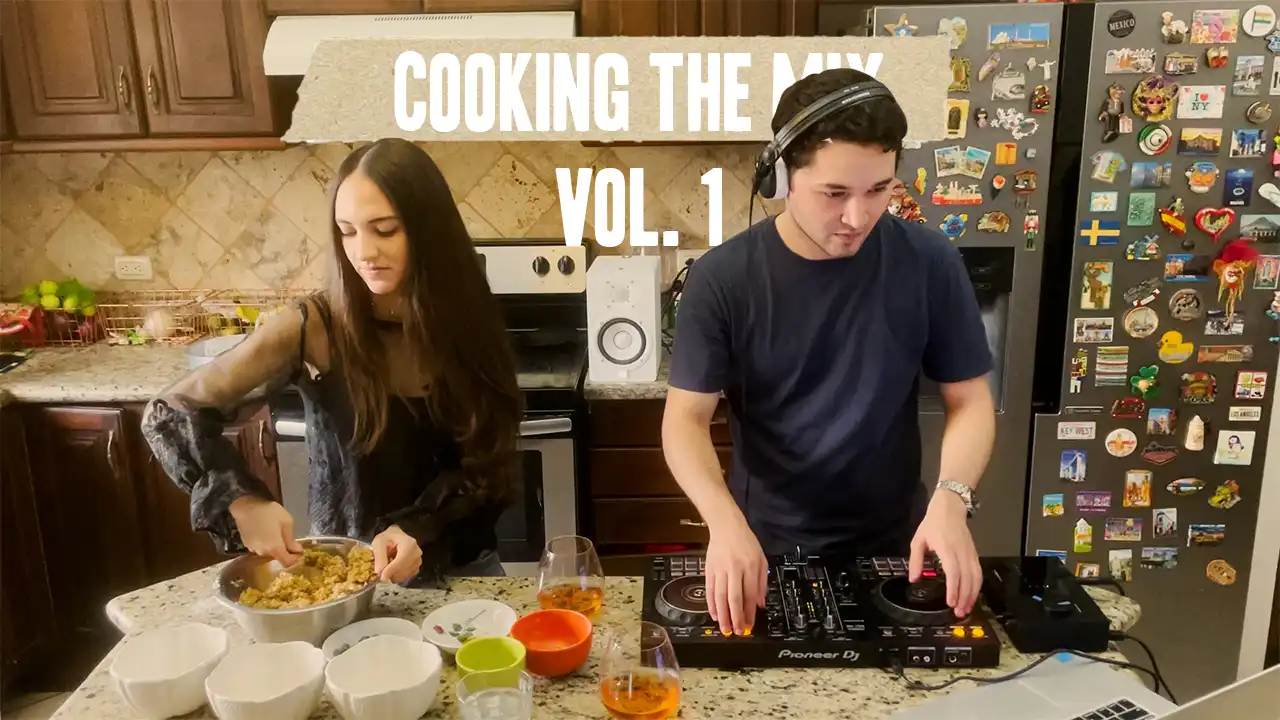
How to Mix a DJ Track — Transitions That Actually Sound Good
How to Mix a DJ Track — Transitions That Actually Sound Good
One of the biggest leaps in DJing is going from “I can play two tracks at the same time” to “my transitions actually sound musical.” That gap is mostly about three things: phrasing, EQ, and timing.
The Foundation: Phrasing
Every track is built in 4-bar, 8-bar, and 16-bar musical phrases. A phrase is a complete musical idea — when it ends, the music reaches a natural resting point before something new begins.
Bad DJs transition in the middle of a phrase. It sounds like cutting someone off mid-sentence.
Good DJs transition at phrase boundaries. The music flows so naturally that the crowd often doesn’t notice the track changed.
How to count phrases:
- Count beats in groups of 4
- Count bars in groups of 8 — that’s one phrase
- New phrases usually coincide with energy changes: a new element comes in, or the track strips down
Train yourself to hear phrase boundaries before worrying about any technique.
The Long Blend
This is the most common transition — a gradual crossfade over 16–32 bars.
- Cue the incoming track in your headphones, beatmatched and starting at a phrase boundary
- Slowly bring its fader up as you approach the mix point
- Cut the bass on the incoming track initially — never let two basslines clash
- As both tracks play, gradually raise the incoming bass while fading the outgoing bass
- Complete the swap at a phrase boundary, then fade out the outgoing track
The bass swap is everything. Two bass frequencies fighting each other is the tell-tale sign of an amateur mix.
The Quick Cut
For high-energy moments, a clean cut works better than a long blend. You switch tracks instantly at a phrase boundary — no crossfade. It’s risky (the BPMs must match exactly) but can be dramatic and powerful when done right.
EQ Techniques
Bass swap — the core move. Master this first.
High-pass filter intro — many tracks have a filtered intro. Use that naturally thin section to slip the track in cleanly.
Echo out — apply a short echo to the outgoing track right before you cut. It softens the ending and sounds intentional.
Filter sweep — sweep the filter down on the outgoing track as the incoming rises. Very satisfying when timed to the music.
Effects: Use Sparingly
Effects should enhance a transition, not rescue a bad one. The best DJs use effects in ways so subtle you’re not sure you heard anything — just that the moment felt bigger.
If you’re reaching for an effect because you’re nervous, step back. Fix the timing, fix the EQ, then add effects.
Listen Back
Record every practice session. Listen to it the next day with fresh ears. You will immediately hear mistakes you couldn’t hear in the moment. Write them down. Those are your targets for next session.
This habit accelerates improvement more than anything else I know.
Check out my YouTube channel for video demos of these techniques.